

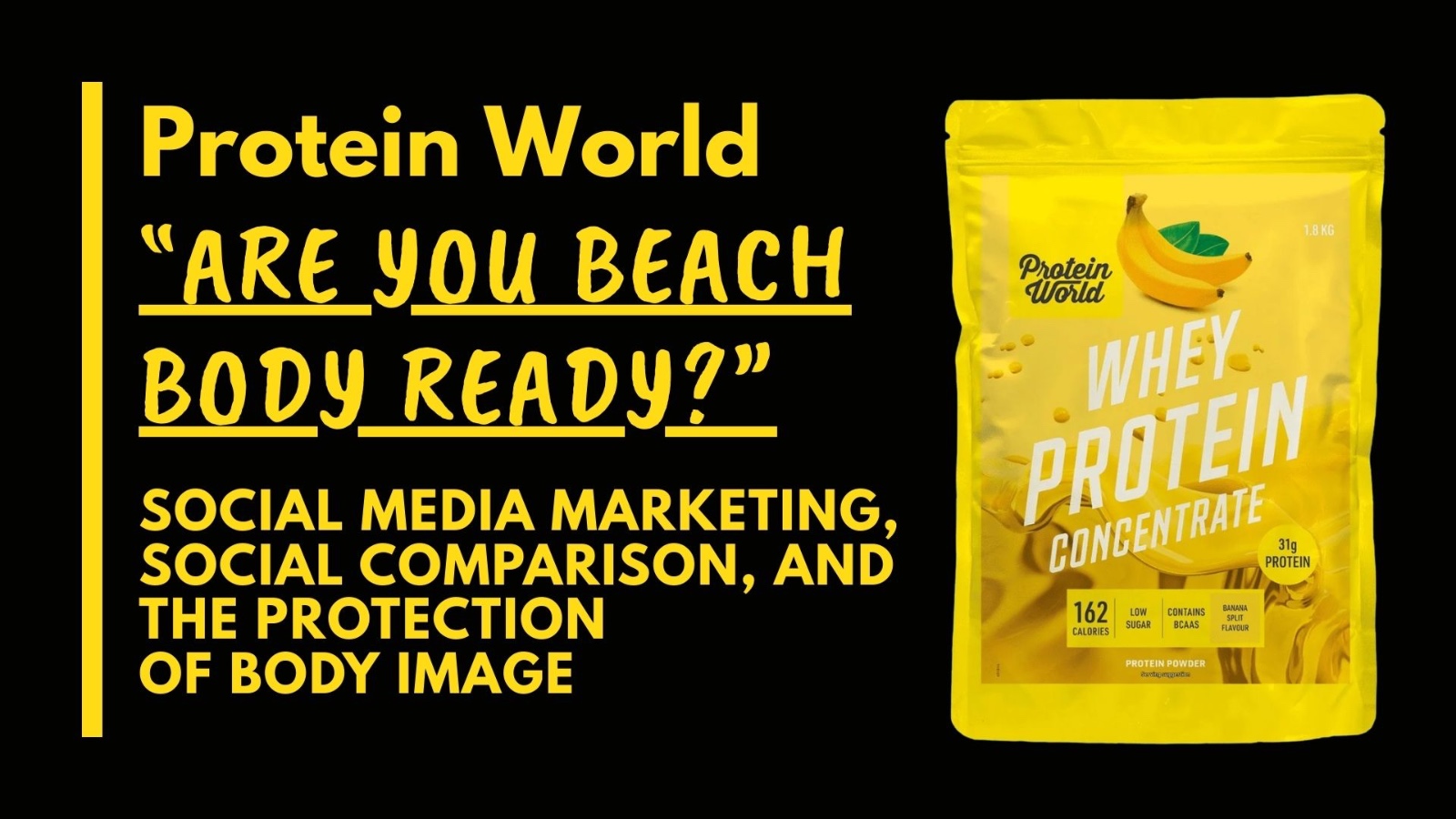
Beach Body Ready”: Social Media Marketing, Social Comparison, and the Protection of Body Image
The “Beach Body Ready” campaign, launched in 2015 by the supplement brand Protein World, has become one of the most debated examples of the intersection between advertising, social media marketing, and female body representation. The campaign featured multiple bikini-clad models sharing similar body types: toned, slim, and aligned with dominant beauty standards, accompanied by the provocative slogan: “Are you beach body ready?”
The message extended beyond promoting protein supplements. It implicitly suggested that women’s bodies require preparation, improvement, and optimization before being publicly displayed. The presence of multiple models did not increase inclusivity; rather, it reinforced standardization. Instead of showcasing body diversity, the campaign visually repeated a single ideal, presenting it as normative.
Provocation as a Social Media Marketing Strategy
From a social media marketing perspective, the campaign strategically relied on simple, direct, and emotionally charged messages, particularly effective in digital ecosystems driven by algorithms. Content that triggers strong emotional reaction, whether admiration or outrage, tends to generate engagement, shares, and increased visibility.
The campaign quickly gained widespread attention, not only because of brand promotion but also due to public backlash. In response, counter-advertisings spread across the Web and users created the hashtag #EachBodyIsReady, sharing images of diverse, real bodies, reclaiming the idea that every body is already “ready.” This reaction illustrates a crucial shift in digital communication: audiences are no longer passive recipients but active participants capable of reshaping brand narratives.
However, evaluating the campaign solely through engagement metrics would overlook its broader psychological and cultural implications.
Social Comparison and Objectification Theory
A deeper understanding of the campaign’s impact can be grounded in social psychology. Social Comparison Theory, proposed by Leon Festinger in 1954, suggests that individuals evaluate themselves by comparing their abilities and attributes with those of others. When comparisons are upward, directed toward idealized models, feelings of inadequacy often emerge.
In the “Beach Body Ready” campaign, the repetition of highly standardized bodies facilitates upward comparison. The uniformity of the models does not normalize diversity; instead, it reinforces a narrow aesthetic benchmark. For adolescent girls and young women, who are particularly vulnerable during identity formation, repeated exposure to such imagery can significantly affect body satisfaction.
Another relevant theoretical framework is Objectification Theory, developed by Barbara Fredrickson and Tomi-Ann Roberts in 1997. This theory argues that in cultures where women’s bodies are frequently evaluated based on appearance, women may internalize an external observer’s perspective, engaging in self-objectification. This internalized surveillance is associated with body shame, anxiety, and disordered eating behaviors.
When advertising implies that a body must be “fixed” or “prepared” to be socially acceptable, it reinforces this objectifying gaze. The body becomes a project to manage rather than a lived, subjective experience.
Eating Disorders and the Protection of Body Image
Research consistently identifies body dissatisfaction as a major risk factor for the development of eating disorders, including anorexia nervosa, bulimia nervosa, and binge eating disorder. While a single advertising campaign cannot directly cause such conditions, it contributes to a broader media environment that normalizes restrictive and appearance-focused standards.
Although the campaign dates back approximately ten years, its relevance remains striking. Despite increased awareness of body positivity and inclusivity, aesthetic pressure continues to shape digital culture, particularly within fitness and wellness industries.
For digital communication platforms such as X5G, this case offers a valuable reflection. In today’s landscape, marketing effectiveness cannot be measured solely in terms of reach, impressions, or engagement rate. Ethical responsibility and long-term reputational impact must also be considered, especially when campaigns target vulnerable demographics.
The protection of body image should not be viewed merely as an ethical obligation but also as a strategic asset. Brands that promote inclusivity and authenticity are more likely to build sustainable trust and meaningful relationships with their audiences.
In conclusion, “Beach Body Ready” demonstrates how a provocative campaign can achieve high visibility while simultaneously raising significant cultural concerns. Marketing does not simply sell products: it shapes norms, expectations, and self-perception. This case highlights the powerful role of commercial communication in influencing psychological well-being. For marketing professionals, it underscores a critical lesson: visibility may generate attention, but responsibility builds credibility.